7/8/2026
Buying Guide
تیم تحریریه پروشات آریا
How to Choose Safe Playground Equipment for Children
Choosing playground equipment is not only about color or appearance. The children’s age range, available installation area, equipment materials, safety surfacing, and inspection plan all need to be considered from the start. This guide provides a practical selection path for nurseries, parks, residential complexes, and indoor play areas.
1. Define the project before comparing products
Record the installation setting, usable dimensions, expected number of users, and age group. Equipment intended for a small indoor nursery is not automatically suitable for an outdoor public park. Start by comparing the available children’s playground equipment categories.
2. Match the product to the intended age group
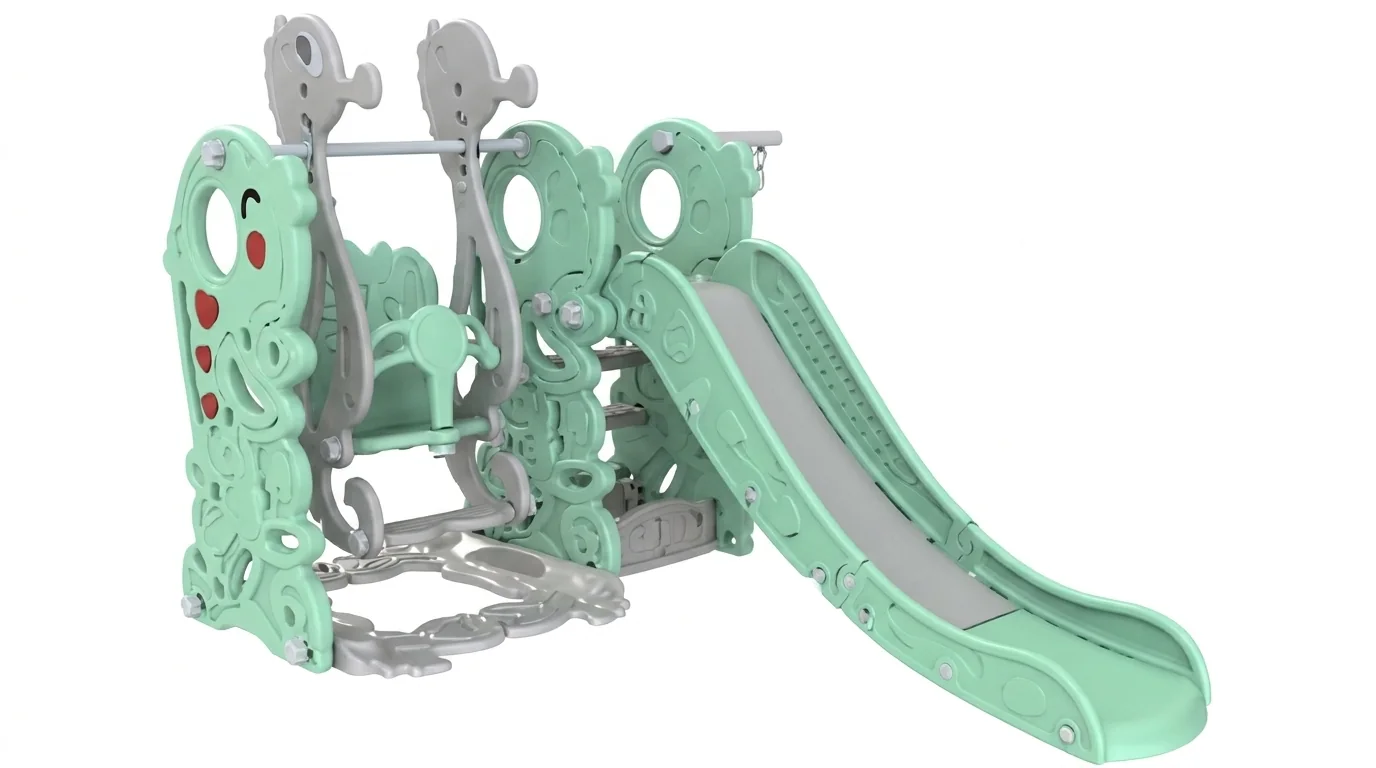
Use the age information shown on each product page or official specification sheet. On this website, the Dolphin PS5101, Squirrel PS5107, and ABCD PS5110 are listed for ages 2–8. The Spider rope-climbing tower is listed for ages 5–14 and represents a different type of play activity.
3. Check dimensions and free space
The equipment footprint is only part of the required area. Allow adequate space around slides, swings, seesaws, and climbing equipment for movement, access, and maintenance. Compare the site plan with the stated product dimensions before ordering.
4. Review materials and construction details
The nursery models listed above use HDPE components manufactured by rotational moulding. Rope-play equipment has different structural and material requirements. Review each model separately and confirm its materials, dimensions, age range, and installation method during the quotation process.
5. Include safety surfacing in the plan
Surfacing should be selected according to the equipment, installation environment, and potential fall conditions. The website lists EPDM granular safety flooring for playground and park applications and interlocking tatami flooring for indoor areas. See the playground safety flooring guide for a direct comparison.
6. Plan inspection and maintenance
- Inspect fasteners, anchors, moving parts, ropes, and seating at regular intervals.
- Check surfacing for separation, subsidence, or uneven areas.
- Restrict access to any equipment that requires repair until the issue is resolved.
- Keep the product information and maintenance records available for future inspections.
Pre-order checklist
- Are the intended age group and site capacity defined?
- Do the equipment dimensions and surrounding free space fit the plan?
- Have surfacing and sub-base requirements been considered?
- Are installation, inspection, and spare-part requirements clear?
Answering these questions before requesting a quotation makes it easier to compare suitable models and discuss the project with a technical adviser.
Share: